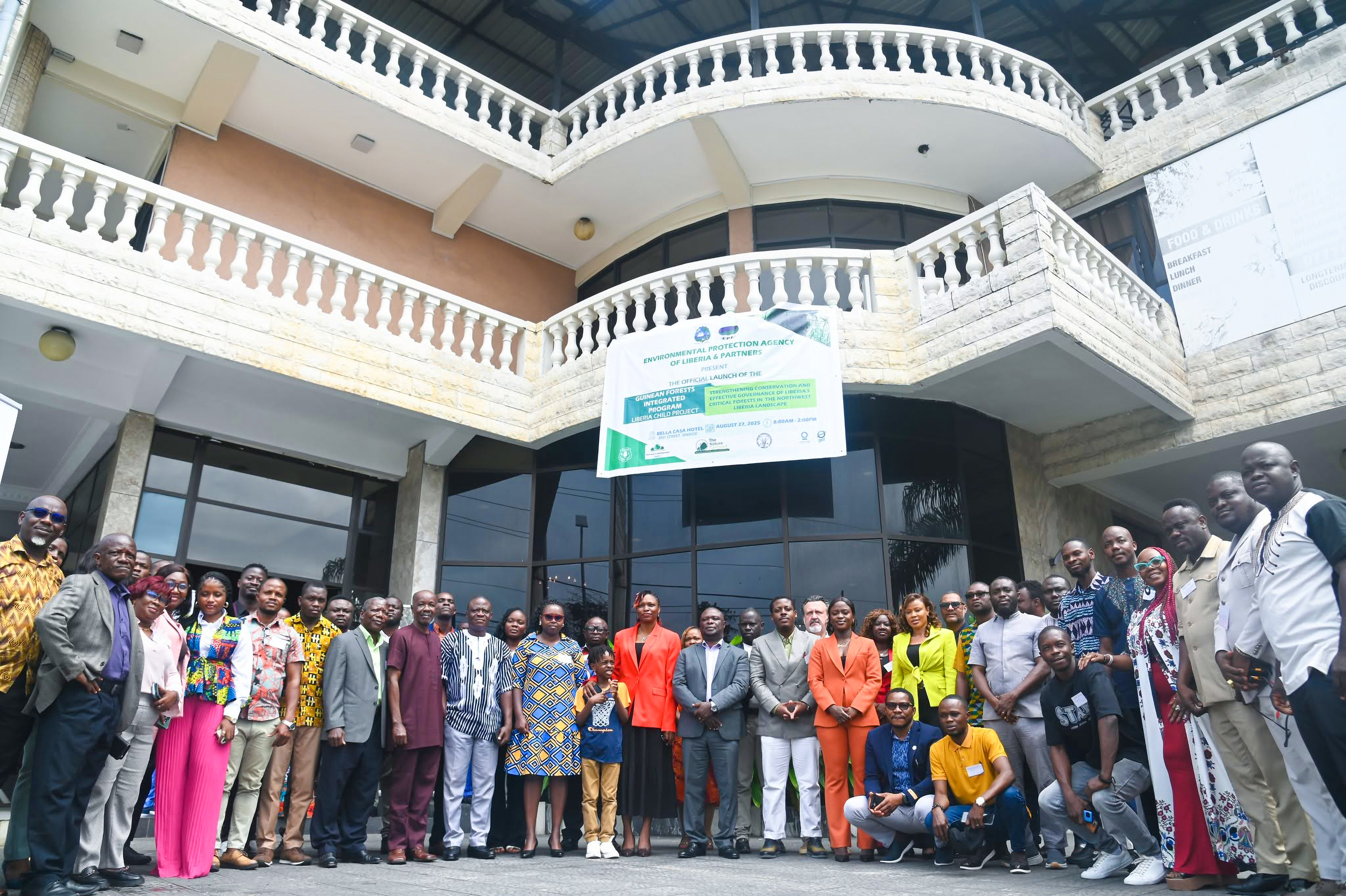
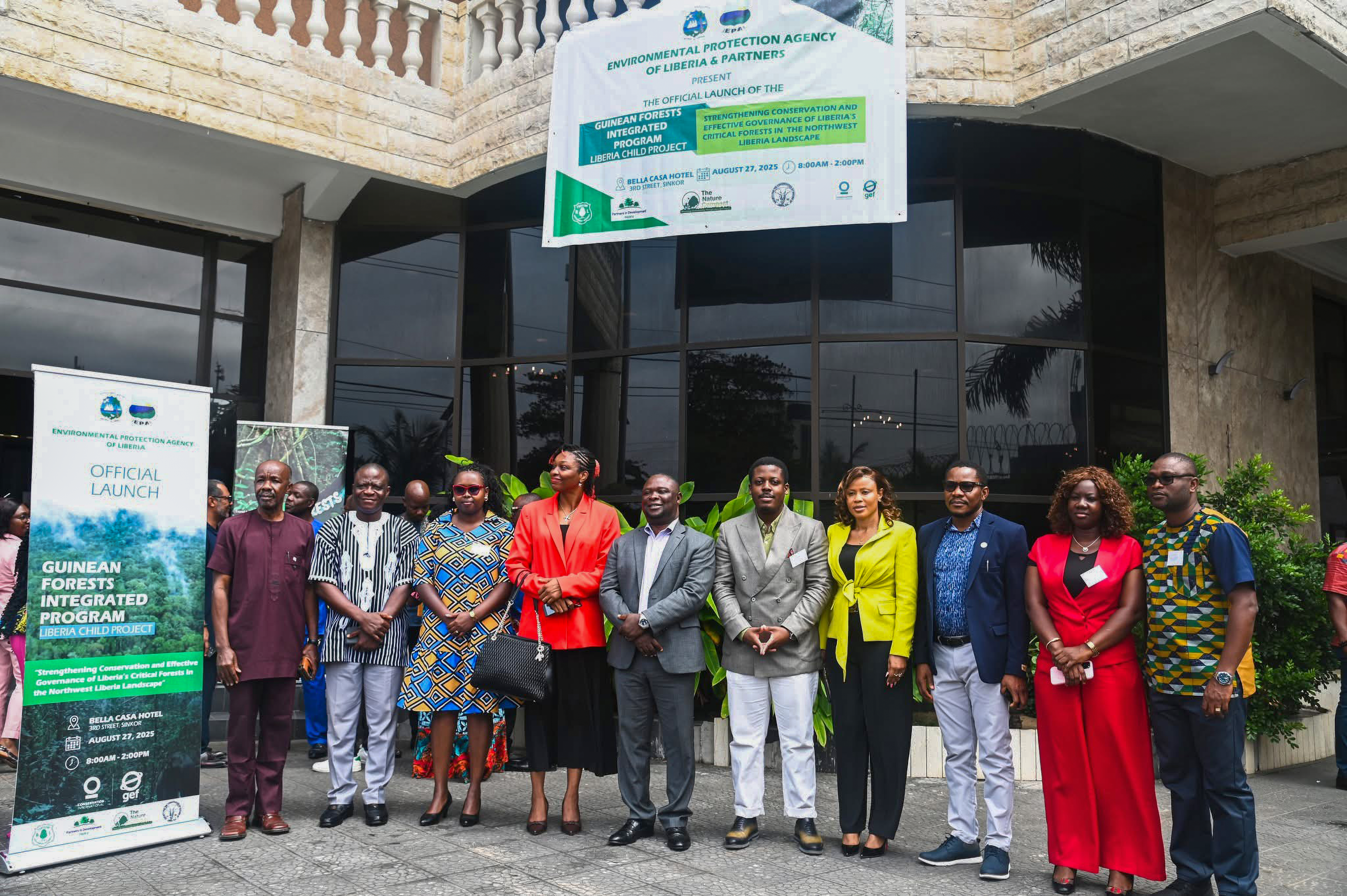
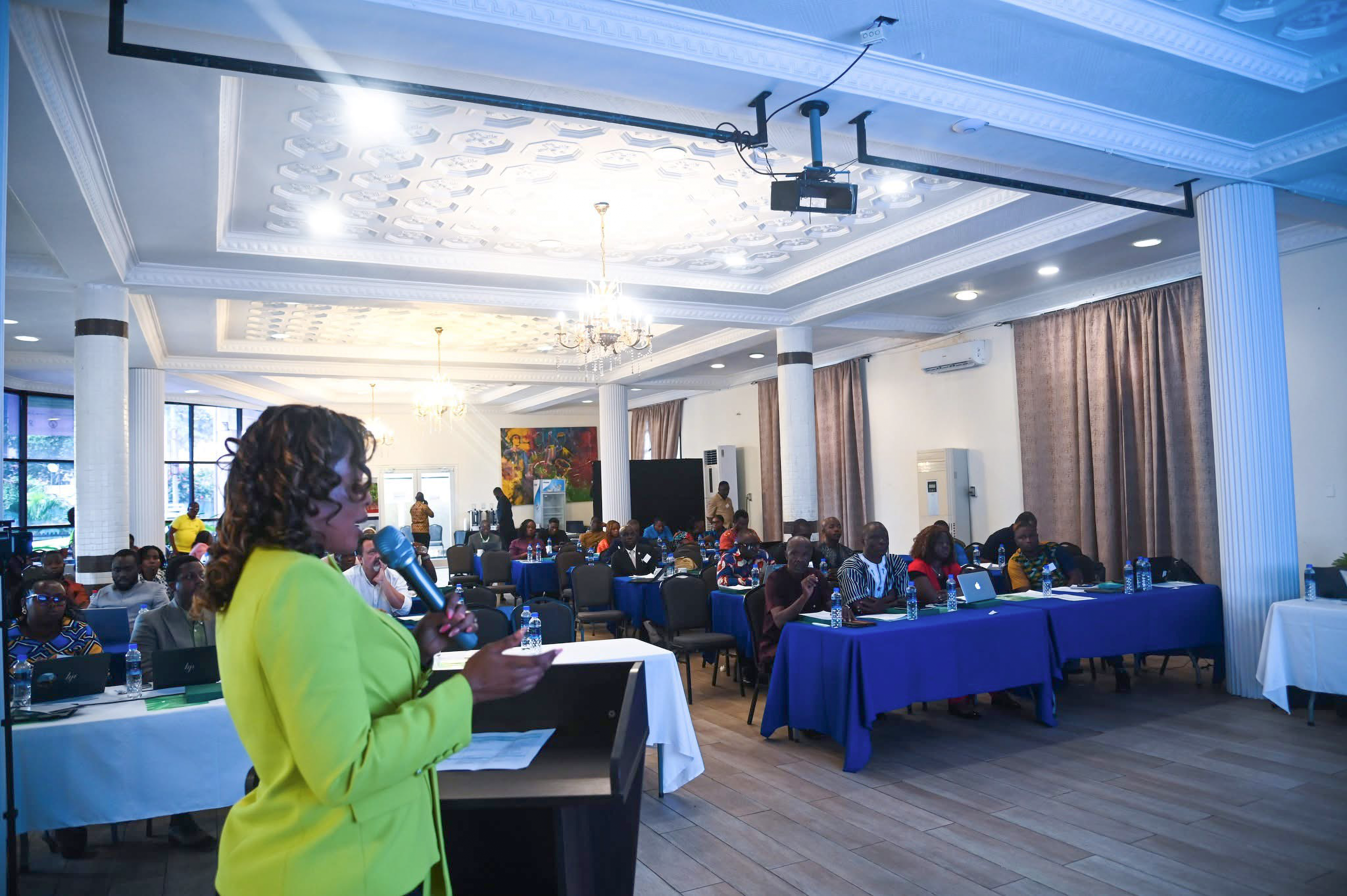
The Government of Liberia, through the Environmental Protection Agency (EPA) and the Society for the Conservation of Nature of Liberia (SCNL), officially launched the Liberia Child Project under the Guinean Forests Integrated Program (GFIP).
The event, which was attended by implementing partners, the Environmental Protection Agency of Sierra Leone, local government representatives, and a representative from the Conservation International-GEF Agency marked a major step forward in the country’s contribution to regional efforts of protecting the Guinean Forests.
Speaking on behalf of the EPA’s Executive Director, Mr. Anthony Kollie, Acting Executive Director of the EPA, called for strong partnerships to ensure the project’s success, emphasizing that “the project demonstrates Liberia’s commitment to both regional and global commitment to safeguard biodiversity while advancing sustainable development.”
From Conservation International Liberia, Mr. Roger Emmou highlighted the program’s vision to elevate the Guinean Forest to global prominence alongside the Congo Basin and Amazon Rainforest, noting that the launch of the Liberia Child Project contributes to a broader regional agenda for biodiversity conservation, sustainable land management, and improved forest governance.
Madam Bintu Siya Foray of Sierra Leone’s EPA expressed her institution’s readiness to share knowledge and learn from Liberia’s approach, reflecting the spirit of cross-border collaboration that is central to GFIP’s regional implementation.
Swipe to see
the programs in action
A New Chapter Begins
From a local government perspective, Grand Cape Mount Superintendent and Co-Chair for Administration of the Superintendent Council of Liberia, Foley J. Kiatamba, pledged the full cooperation of local communities in supporting the project’s implementation.
The project, “Strengthening Conservation and Effective Governance of Liberia’s Critical Forests in the Northwest Liberia Landscape,” will support sustainable biodiversity conservation, forest ecosystem management, and inclusive livelihood opportunities in key forest landscapes of northwest Liberia.
Through the Liberia Child Project, GFIP and its partners aim to improve conservation outcomes in critical forest areas, strengthen institutional coordination, promote community-led conservation, and support climate-resilient livelihoods.
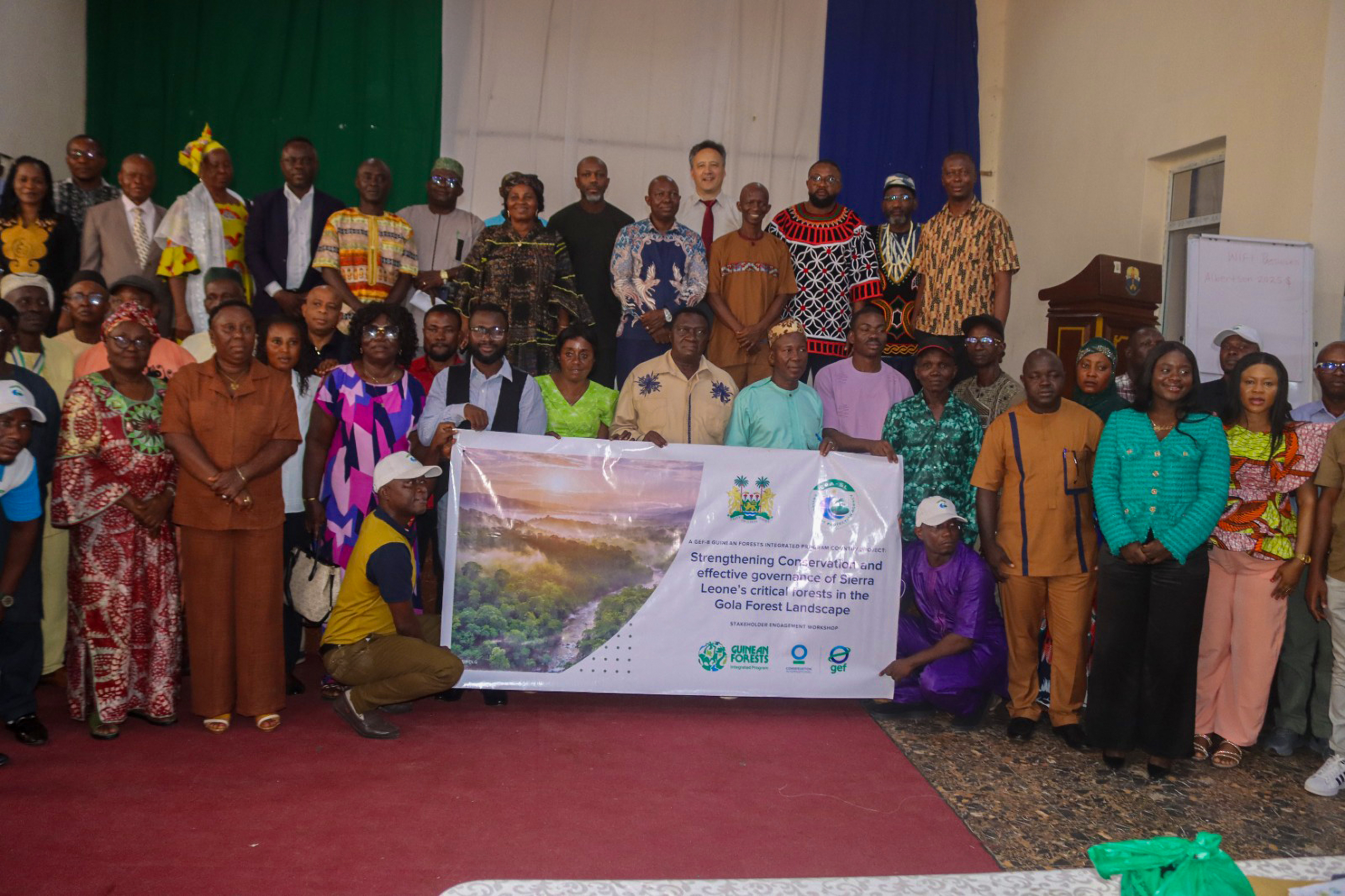
Sierra Leone Partners Align Around Delivery in the Greater Gola LandscapePartners at the two-day workshop NewsSierra Leone Partners Align Around Delivery in the Greater Gola Landscape Sierra LeoneA two-day coordination workshop was held to clarify partner responsibilities and strengthen the shared operating arrangements needed to move the country's project into implementation. August 2026- Sierra Leone partners delivering Sierra Leone’s Guinean Forests Integrated Program country project have aligned around the roles, standards and coordination arrangements needed to advance implementation in the Greater Gola landscape. The Environment Protection Agency, Sierra Leone Lead Executing agency convened a two-day partnership coordination and planning workshop with Conservation International and executing and technical partners. Participants reviewed the project’s objectives, components and expected results, while clarifying responsibilities for reporting, financial management and operational delivery. The discussion connected national and international institutions working across protected-area management, forestry, mapping, conservation, certification and community-focused implementation. Partners identified stronger coordination and capacity development as practical priorities for keeping delivery aligned and addressing issues early. The SierraLeone project is designed to respond to interconnected pressures affecting forests, biodiversity and climate resilience. Participants therefore emphasized an integrated management approach and the importance of national and regional cooperation across the Upper Guinean Forest biome. Clear responsibilities and shared operating standards can reduce duplication, strengthen accountability and help partners direct their expertise towards common results. This alignment is particularly important in the Greater Gola landscape, where effective conservation depends on coordinated action among institutions and across borders. Representing the Executive Chairman of the Environment Protection Agency, Chief Director Sheku Mark Kanneh underscored the project’s alignment with the triple planetary crisis of climate change, biodiversity loss and pollution, therefore the project is intended to address these challenges through an integrated management approach. He further stated that the country project is part of “the global effort to protect the Upper Guinean Forest biome, which is a biodiversity hotspot that requires regional cooperation to protect.”The workshop concluded with partners reaffirming their commitment to coordinated planning and collective action. The workshop marks a significant step forward in safeguarding Sierra Leone’s environment and ensuring sustainable development for future generations. The immediate focus is to carry the agreed coordination arrangements into implementation, strengthen support to delivery partners and maintain regular communication on progress, challenges and learning. Key FactThe Guinean Forests Integrated Program (GFIP) is a coordinated programmatic approach that is working to strengthen the effective management and governance of the Guinean forests.Related News
0:00
Guinean Forests IP
News
Sierra Leone Partners Align Around Delivery in the Greater Gola Landscape
Partners at the two-day workshop
Côte d’Ivoire and Liberia Sign Landmark Agreement to Protect the Taï-Grebo-Krahn-Sapo Transboundary LandscapeGroup photo of officials in attendance at the signing ceremonyPress ReleaseCôte d’Ivoire and Liberia Sign Landmark Agreement to Protect the Taï-Grebo-Krahn-Sapo Transboundary Landscape LiberiaOn July 14, 2026, the governments of Côte d’Ivoire and Liberia, through the Ivorian Office of Parks and Reserves (OIPR) and Liberia’s Forestry Development Authority (FDA), signed the Taï-Grebo-Krahn-Sapo (TGKS) transboundary agreement, setting in motion a renewed commitment to jointly protect one of West Africa’s most important tropical forest landscapes. The signing of the agreement represents a major milestone for the Guinean Forests, as it strengthens cooperation between the two countries and advances a bold move to protect a high-biodiversity rainforest that provides critical habitat, ecosystem services, and livelihood support for communities on both sides of the border. The TGKS landscape spans across the Taï National Park in Côte d’Ivoire and the Grebo-Krahn and Sapo National Parks in Liberia. These forest blocks form a critical part of the Upper Guinean Forest ecosystem and are home to globally significant biodiversity, including endangered West African chimpanzees, pygmy hippos, forest elephants, and hundreds of plant varieties. Through the agreement, Côte d’Ivoire and Liberia have reaffirmed their shared commitment to coordinated forest governance, sustainable conservation, and strengthened collaboration among protected area authorities, local communities, conservation partners, and other stakeholders. The agreement is expected to support joint planning, improved management of the TGKS complex, and stronger responses to cross-border threats such as illegal logging and mining, poaching, and unsustainable land use. At the Guinean Forests Integrated Program, we are excited to witness this coordinated effort from stakeholders to protect one of the world’s most significant forest regions. As GFIP continues to support regional coordination across the Guinean Forests, the signing of the TGKS transboundary agreement offers a strong example of how countries can work together to protect shared natural heritage and build a more sustainable future for people and nature. Key FactsThe Taï-Grebo-Krahn-Sapo (TGKS) National Parks accounts for a significant track of the upper Guinean Forests. It includes a UNESCO World Heritage site (Tai national Park). Related News
0:00
Guinean Forests IP
News
Côte d’Ivoire and Liberia Sign Landmark Agreement to Protect the Taï-Grebo-Krahn-Sapo Transboundary Landscape
Group photo of officials in attendance at the signing ceremony
Guinea Launches GEF-8 Country Project to Strengthen Conservation of Mont Nimba and Ziama Biosphere ReservesGroup photo of Guinea country project launch NewsGuinea Launches GEF-8 Country Project to Strengthen Conservation of Mont Nimba and Ziama Biosphere Reserves GuineaOn June 5, Guinea officially launched the country’s Child project to strengthen the restoration and conservation of the Mont Nimba and Ziama Biosphere Reserves, marking an important milestone for biodiversity conservation and sustainable landscape management in the country. Held as part of World Environment Day celebrations, the launch brought together national and decentralized government authorities, civil society organizations, and local stakeholders to support the effective implementation of the project. During the event, participants reviewed the project’s key components, expected results, and implementation arrangements. The launch also featured a multi-stakeholder dialogue on the conservation challenges and opportunities facing the Mont Nimba and Ziama landscapes. The official launch ceremony was presided over by Madam. Djami Diallo, Minister of Environment and Sustainable Development, with remarks delivered by the Governor of Nzérékoré Region and the IUCN representative. In her remarks, the Minister reaffirmed the Government of Guinea’s commitment to protecting the Mont Nimba World Heritage Site and contributing to its removal from the List of World Heritage in Danger. For his part, the IUCN representative emphasized the importance of strong partnerships and coordinated action to safeguard Guinea’s globally significant biodiversity. The meeting marked a major step toward establishing a shared vision, strengthening national and local ownership, and reinforcing collaboration among the institutions involved in implementing the project. Key FactsIn Guinea, forests provide vital ecosystem services such as fresh water, climate regulation, and resources for food and medicine, which local communities depend on for their livelihoods. Related News
0:00
Guinean Forests IP
News
Guinea Launches GEF-8 Country Project to Strengthen Conservation of Mont Nimba and Ziama Biosphere Reserves
Group photo of Guinea country project launch
EPA Sierra Leone Launches GEF-Funded Project to Strengthen Conservation of the Greater Gola Forest LandscapeGroup photo of Sierra Leone Country project launch News EPA Sierra Leone Launches GEF-Funded Project to Strengthen Conservation of the Greater Gola Forest Landscape Sierra LeoneKenema, Sierra Leone — The Environment Protection Agency Sierra Leone (EPA-SL), in collaboration with national and international partners, has officially launched the GEF-funded project titled “Strengthening Conservation and Effective Governance of Sierra Leone’s Critical Forests in the Greater Gola Forest Landscape.” The launch event was held on 10 March 2026 at the Albertson Hotel in Kenema, Eastern Province, Sierra Leone, bringing together key stakeholders to mark an important step toward strengthening forest governance and conservation in one of the country’s most significant forest landscapes. The project is designed to support the conservation and effective management of critical forest areas within the Greater Gola Forest Landscape, while promoting stronger institutional coordination, sustainable land management, and community participation in forest protection. Through this initiative, EPA-SL and its partners aim to address growing pressures on forest ecosystems, safeguard biodiversity, and contribute to climate resilience for communities and landscapes that depend on healthy forest systems. The official launch also provided a platform to strengthen partnerships among government institutions, conservation organizations, development partners, local stakeholders, and communities working toward the long-term protection of Sierra Leone’s critical forests. As implementation begins, the project is expected to contribute to improved governance, enhanced biodiversity conservation, and more inclusive approaches to managing the Greater Gola Forest Landscape for the benefit of people and nature.Key FactThe Guinean Forests Integrated Program (GFIP) is a coordinated programmatic approach that is working to strengthen the effective management and governance of the Guinean forests.Related News
0:00
Guinean Forests IP
News
EPA Sierra Leone Launches GEF-Funded Project to Strengthen Conservation of the Greater Gola Forest Landscape
Group photo of Sierra Leone Country project launch
Communities Help Shape the Path Towards Clearer Customary Land Rights in LiberiaCommunities meeting in Hassala clean, Lofa CountyNewsCommunities Help Shape the Path Towards Clearer Customary Land Rights in Liberia LiberiaConsultations in Lofa and Gbarpolu counties in Liberia are bringing community knowledge into efforts to address boundary concerns and strengthen land-tenure security. July 2026- Liberia communities in Hassala, Koninga and Bartee clans are contributing their knowledge and priorities to efforts aimed at addressing longstanding customary land and boundary discussions in Northwest Liberia. The Society for the Conservation of Nature of Liberia, the lead executing partner for the GFIP Liberia country project, worked with the Liberia Land Authority to conduct a joint fact-finding mission and stakeholder consultations in the three clans. The engagement created space for community members to describe existing disputes, explain how unresolved boundaries affect neighboring communities, and identify issues that require further attention. During the consultations, Liberia Land Authority representatives explained the Customary Land Formalization community participants clearer information on how customary land claims can be documented and how local participation can shape boundary harmonization. In particular, community participants called for continued collaboration among communities, the Liberia Land Authority, GFIP partners and other relevant institutions. They stressed that people living along disputed boundaries should participate meaningfully in the process and that agreements should be formally documented to improve clarity and reduce the risk of future disputes. These processes are important as clearer customary land rights can provide a stronger basis for inclusive land-use planning, local decision-making and sustainable natural-resource management. The findings from the mission will continue to inform future engagement and support a process grounded in community knowledge, transparency and evidence.About the project Liberia is one of five participating countries, in the Guinean Forests Integrated Program (GFIP.Supported by the Global Environment Facility (GEF), the regional initiative aims to strengthen forest governance, promote sustainable natural resource management, and conserve one of the world's most important tropical forest ecosystems. The GEF-funded GFIP, is led by Conservation International. and comprises five interlinked country projects spanning Guinea (led by The International Union for Conservation of Nature-IUCN), Guinea-Bissau (led by IUCN), Liberia (led by Conservation International-CI), Sierra Leone (led by CI), and Togo (led by The Food and Agriculture Organization-FAO), alongside a Regional Coordination Project led by Conservation International in partnership with BirdLife International. In Liberia, the project executing partners are Environmental Protection Agency of Liberia and Society for the Conservation of Nature of Liberia Key FactThe Guinean Forests Integrated Program (GFIP) is a coordinated programmatic approach that is working to strengthen the effective management and governance of the Guinean forests.Swipe to seethe programs in actionAbout the project Liberia is one of five participating countries, in the Guinean Forests Integrated Program (GFIP.Supported by the Global Environment Facility (GEF), the regional initiative aims to strengthen forest governance, promote sustainable natural resource management, and conserve one of the world's most important tropical forest ecosystems. The GEF-funded GFIP, is led by Conservation International. and comprises five interlinked country projects spanning Guinea (led by The International Union for Conservation of Nature-IUCN), Guinea-Bissau (led by IUCN), Liberia (led by Conservation International-CI), Sierra Leone (led by CI), and Togo (led by The Food and Agriculture Organization-FAO), alongside a Regional Coordination Project led by Conservation International in partnership with BirdLife International. In Liberia, the project executing partners are Environmental Protection Agency of Liberia and Society for the Conservation of Nature of Liberia Related News
0:00
Guinean Forests IP
News
Communities Help Shape the Path Towards Clearer Customary Land Rights in Liberia